 Virtual Colossus
The Electronic Random Number Indicator Equipment
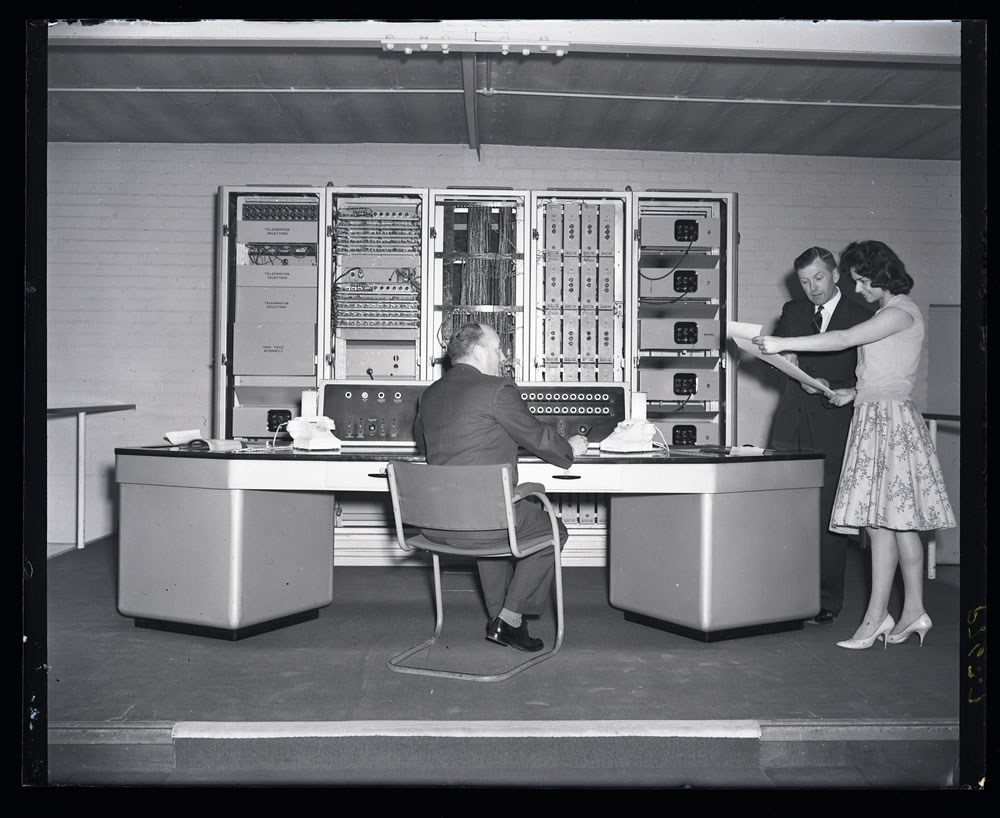
E.R.N.I.E. stands for the Electronic Random Number Indicator Equipment, a hardware random number generator created to find the winners each month of the Premium Bond prize draw. The first ERNIE was built in 1956 by the Post Office Research Station at Dollis Hill, by some of the same team of engineers who built Colossus, the world’s first electronic computer. ERNIE was installed at Lytham St Annes, a coastal town in Lancashire, just south of Blackpool.
What is a Premium Bond?
A Premium Bond is a lottery bond issued by the UK government’s National Savings and Investments agency. The bonds are entered in a regular prize draw and can currently win up to £1,000,000 each month. The first draw using the original ERNIE was in June 1957, with a top prize of £1,000. There were 48,487,854 bond units in that first draw, with 23,142 prizes to allocate.
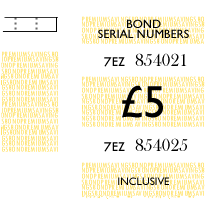
Premium Savings Bonds were first issued in 23 denominations, from £1 to £500. A £1 bond had a single serial number, and larger bonds had several serial numbers, one for each pound of their face value. The £5 example shown has five entries, with serial numbers 7EZ 854021 to 7EZ 854025.
Each of the original bonds had an 8- or 9-digit number, made up of a code followed by a 6-digit number. The code is a numeral giving the tens of millions (a zero wasn’t printed, giving an 8-digit number), one of 23 letters giving the value of the bond, then a letter giving the millions. For example, bond number 2AS 123456 is bond number 27,123,456, with a value of A (£1).
| Letter | Value |
|---|---|
| A | £1 |
| B | £2 |
| C | £3 |
| D | £4 |
| E | £5 |
| F | £6 |
| G | £7 |
| H | £8 |
| J | £9 |
| Letter | Value |
|---|---|
| K | £10 |
| L | £20 |
| M | £30 |
| N | £40 |
| P | £50 |
| Q | £60 |
| R | £70 |
| S | £80 |
| T | £90 |
| V | £100 |
| W | £200 |
| X | £300 |
| Y | £400 |
| Z | £500 |
| Letter | Value |
|---|---|
| Z | 0 million |
| B | 1 million |
| F | 2 million |
| K | 3 million |
| L | 4 million |
| N | 5 million |
| P | 6 million |
| S | 7 million |
| T | 8 million |
| W | 9 million |
Design and build
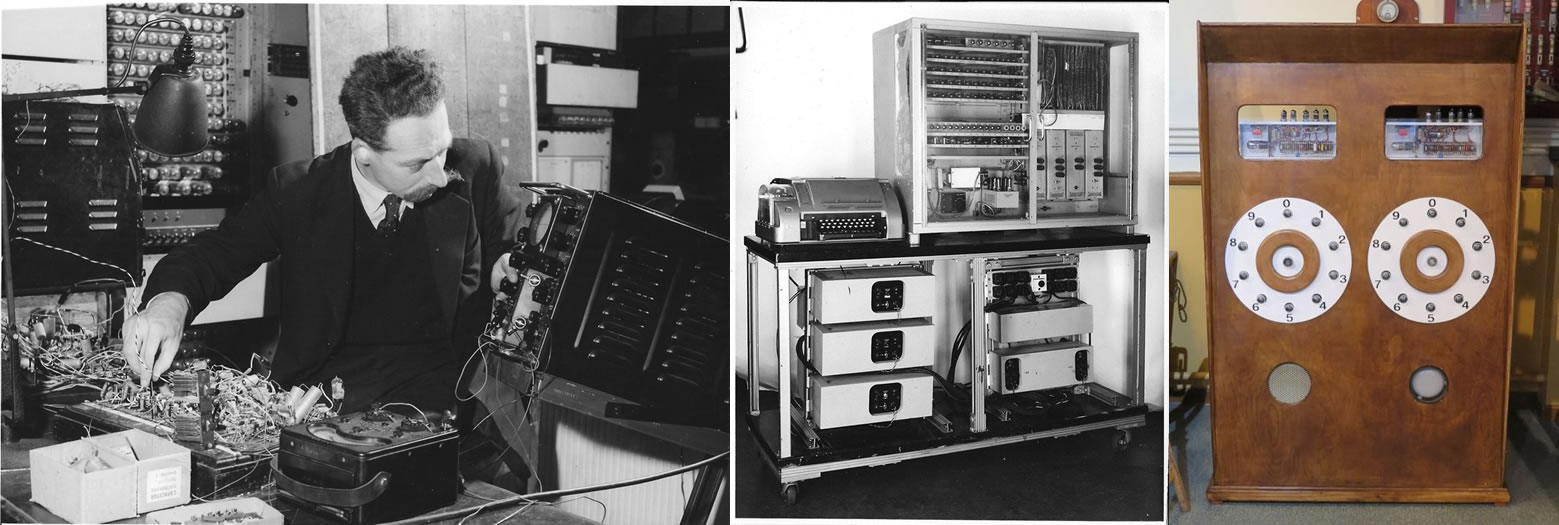
ERNIE was designed by Harry Fensom, one of “the band of brothers” in a department run by Tommy Flowers, the designer of Colossus, and was built by a team led by Sidney Broadhurst.
A test of the components needed was built first, dubbed “Little ERNIE”, and a demonstration unit was also built to show how the random numbers were generated (this unit was rebuilt by The National Museum of Computing in 2017).
ERNIE in the news
British Movietone News: Premium Bonds. Dr Charles Hill, the Postmaster General (1955–1957), shows the original demonstration unit, a rebuild of which you can see at The National Museum of Computing.
British Movietone News: Premium Bond No. 1. The Lord Mayor buys the very first Premium Bond.
British Movietone News: The First Winners. Mr Ernest Marples, Postmaster General (1957–1959), starts the very first draw.
How did it work?
ERNIE uses random noise generated in a neon cold-cathode tube as its main source of random events. Two of these random devices contribute to each digit of the nine-digit bond number, so no single device failure can stop the result being random. The noise from the tube is amplified and, when it peaks above a set level, operates a pulse trigger. This produces pulses of standard height and width, with a minimum gap between them, giving a sequence of pulses spaced randomly in time, with the bias set so that an average of 11,000 pulses a second are generated over a few minutes. Each set of pulses feeds a counter with a scale suited to the number or letter being generated. The first digit needs a scale of six (reduced to three for the first draws, until more bonds were sold); the second counter has a scale of 24, one for each denomination of bond (with one unused); and all the other counters have a scale of 10.
Every sixth of a second, the noise generators are stopped so the counters can be read without being affected by more pulses. With an average of 11,000 pulses a second, a 24-scale counter goes round around 80 times for each number requested, and the 10-scale counters many more times. This is random enough for ERNIE to stop on any of the numbers with equal probability. The outputs of each pair of counters are combined by subtracting one from the other, so the digit produced is still random even if one generator fails or has a cyclic component. For example, on a 10-scale digit, counter A might stop on 9 while counter B stops on 2. ERNIE combines these by moving counter B on until it passes counter A; the digit is the number of steps this takes, in this case 7.
This video gives a basic explanation of how ERNIE calculates its random numbers:
An extract from the full film “The Importance of Being E.R.N.I.E.”, a Central Office of Information film for the General Post Office.
Printing the results
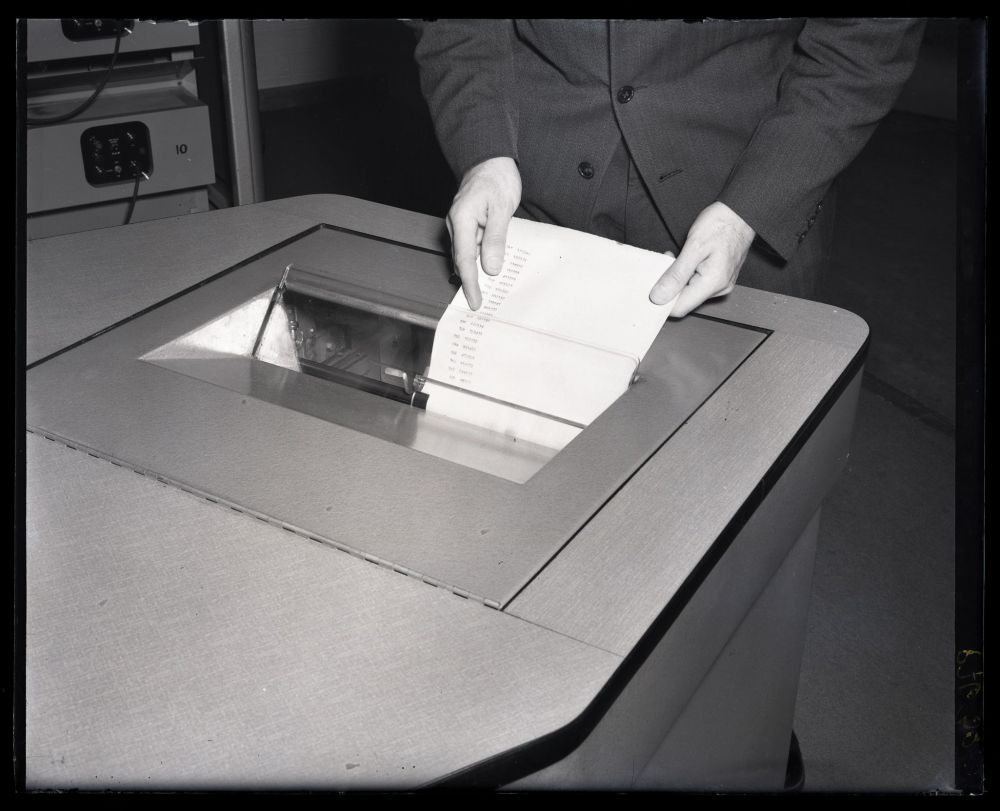
A valid bond number from the random number generators is printed on several teleprinters. Each bond number is printed with an increasing serial number against it, as the largest cash prizes go to the first winners, working down to the smallest, so it is important to keep the numbers in order.
Two Post Office No. 7B page printers (made by Creed) are mounted in the console desk, flush with the top surface and reached through locked drawers at the sides. These are the main teleprinters, and each prints all the random numbers generated. The left-hand printer printed a complete, untouched copy of the whole draw, while the right-hand printer’s output was cut into sections of 100 numbers (ERNIE automatically printed a few spaces every 100 numbers). Each 100 was then cut again into sections of 25 numbers and taken to draw control, so they could check by hand that each winning number was correct and in the right order.
Eleven pairs of teleprinters were also installed in the file room, known as the file printers or spur printers (SPU for short). The files were a manual card store holding photocopies of every registered bond number. They were split into denominations, or groups of denominations, to make searching easier (for example, all the A (£1) bonds together, and B, C and D (£2, £3 and £4) together, as these sold less well than A). Each pair of teleprinters for a file group was one GPO No. 7B page teleprinter and one GPO No. 11A teleprinter, which printed on 3/8-inch gummed paper tape. (Creed called the 11A teleprinter the Model 47.)
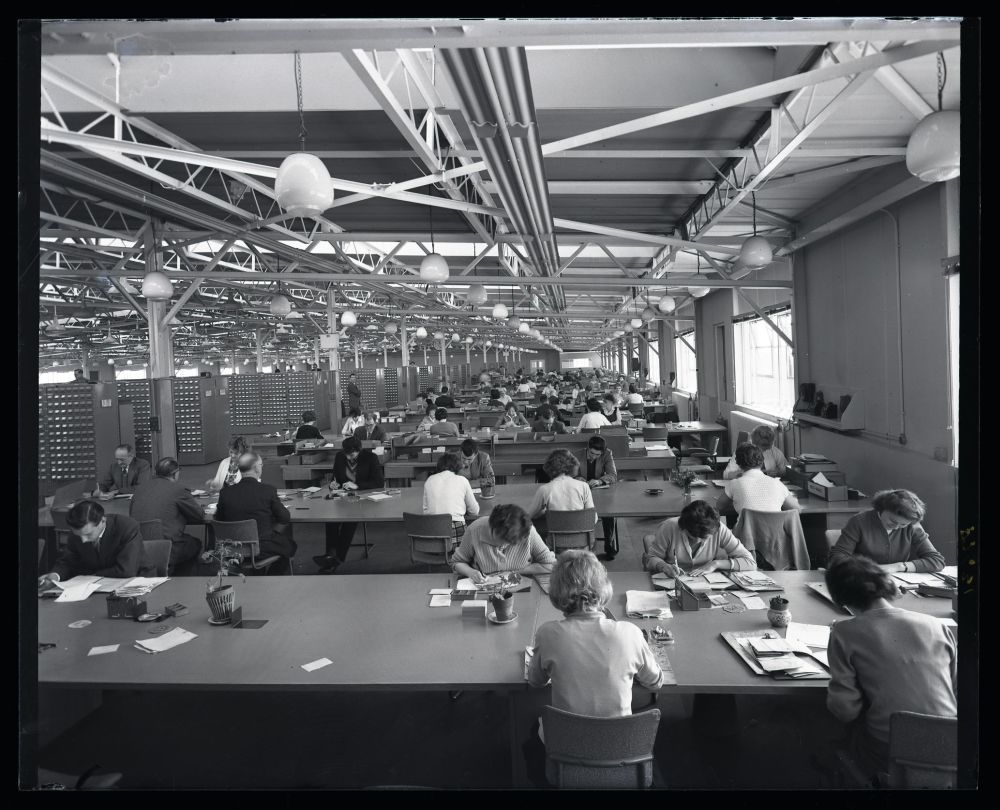
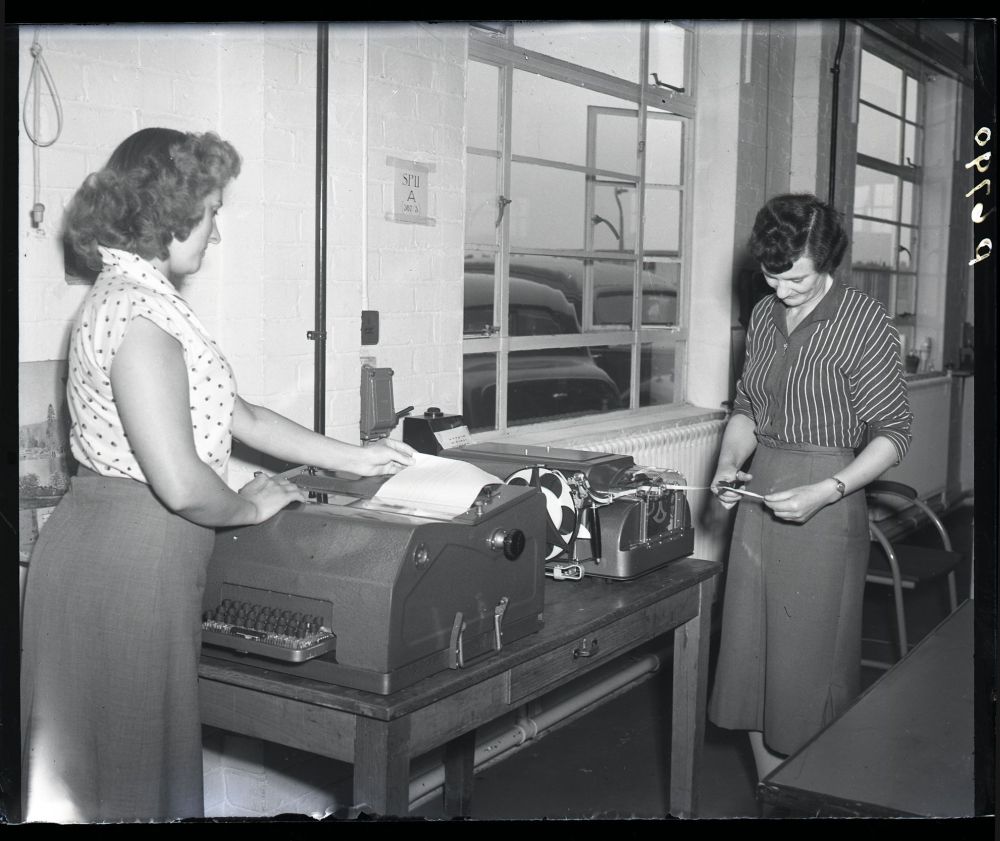
Once ERNIE had generated a number ready to print, the first two characters of the bond number were read, switching the output to the right pair of teleprinters for the 10-million digit and the denomination. The K (£10) and Z (£500) denominations were each split into two sections in the files (the first 10 million and the rest), as they were very popular. Each set of file printers also had a switch to alert the main console operator to a problem (such as a paper jam), so ERNIE could be paused while it was sorted out.
Where is ERNIE now?
ERNIE ran successfully for 15 years before being retired and replaced by a newer model, ERNIE 2, in 1973, mainly to produce numbers faster as Premium Bonds became more popular.
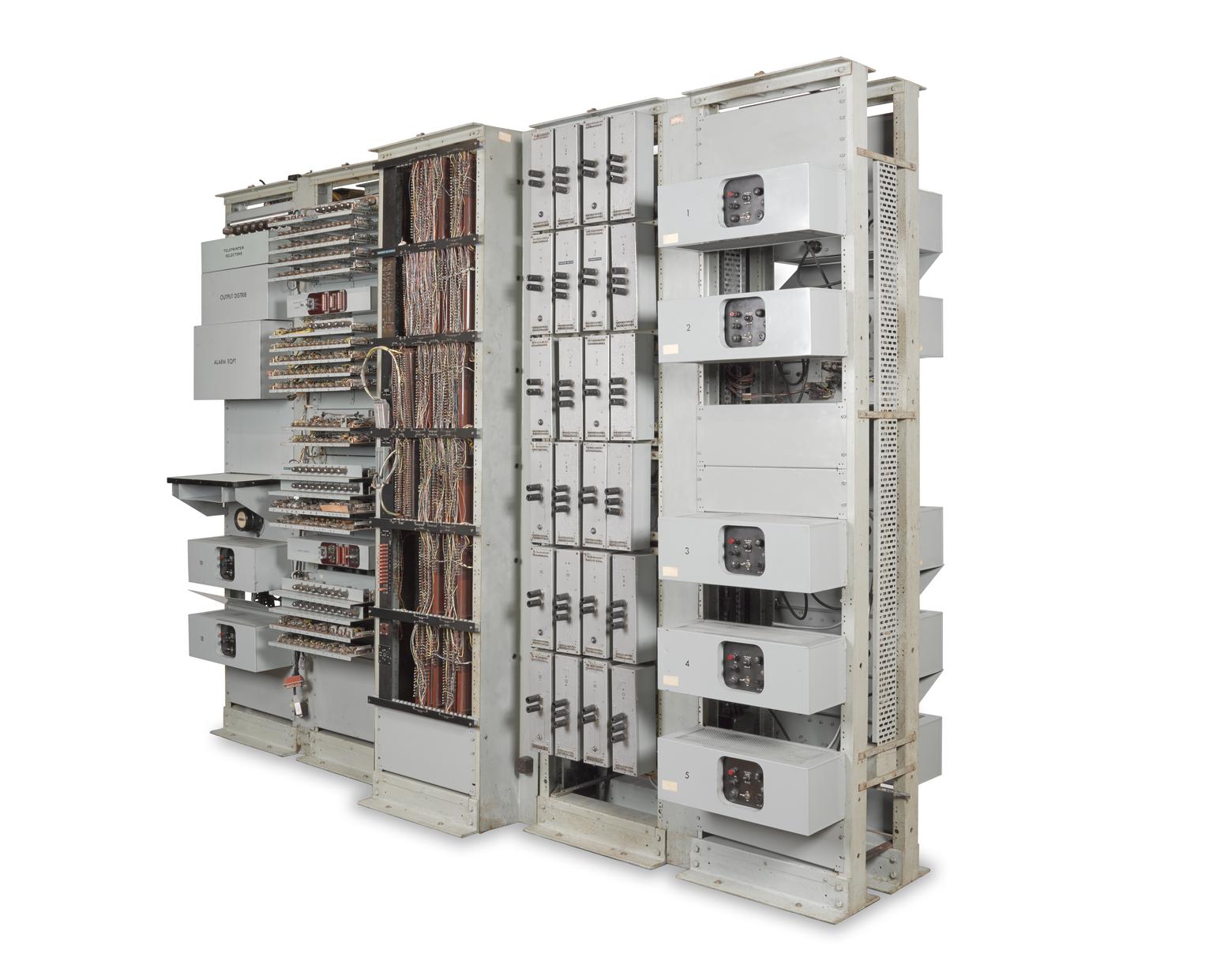
The original ERNIE 1 is now in the Science Museum collection in London, and was on display from 2008 to 2015. High-resolution images are available in the Science Museum collection.
The Science Museum’s ERNIE is missing the original console and isn’t mounted in the original racks, and its redundancy table is completely rearranged from the original specification. It may be the original ERNIE, upgraded or being upgraded, with its components mounted on a stand-alone plinth; or it may be an exact spare kept at Dollis Hill for testing and upgrading new features.
ERNIE’s legacy
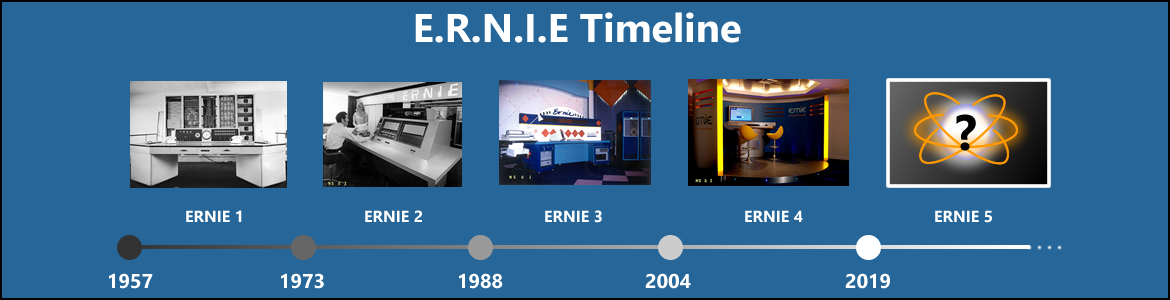
ERNIE has been replaced with a newer, faster version roughly every 15 to 16 years since the original, as more bond numbers were needed in less time. ERNIE 5, the current machine, introduced on 1 March 2019, is powered by quantum technology using light. It can produce enough random numbers for a monthly prize draw in just 12 minutes, 42.5 times faster than its thermal predecessor at the end of its working life.
Next: how to use Virtual ERNIE.